2024 - Chik's Crib

24 December 2024

Yogyakarta - A Holiday with Sun-Phobic Friends

December 24, 2024 0
 Yogyakarta - A Holiday with Sun-Phobic Friends

Sun rise, Mt Merapi

Does a holiday include waking up at 3am every day? 


Well it does when you're in Yogyakarta. By a quirk, dawn starts at 5 in the morning and night falls by 5 in the evening. To catch the sunrises, we set off at 4 o'clock every morning. The outdoor sites are most beautiful at sunrise, but more importantly, in Southeast Asia, the weather warms up rapidly after sunrise.  Yogyakarta after 8am becomes oppressively, intolerably hot. When all is said and done, your day has to start early for the sights to be enjoyable. 


We did so at Mount Merapi and were rewarded with some of the best sights that Yogyakarta has to offer. Under the cover of complete darkness, we reached our destination and took a jeep through the woods 
to the base of the volcano. The early morning air was frigid; and, as the first light of the day lit up the distant horizon, it felt like an adventure.

In a moving car, my phone picture looks like a low-res image from a video game. I assured you, it's real life! 

The scent of sulfur wasn’t prominent, but we could definitely smell ash. And what I initially thought to be clouds gathering near its peak was actually smoke rising from the volcano.


Mt Merapi is an active volcano: its last eruption was just a couple of months ago! We toured the bat-filled bunker at the foot of the mountain, the last-line shelter for adventurers for a volcanic eruption. It didn’t always work: the last time it was used, the doors were closed too late and the noxious gas had already seeped into the chambers and eventually killed the hikers inside.


The remnants of the old village from the last eruption is now a museum commemorating the dead, alongside 
displays of melted glassware and clocks and the skeletons of farm animals. 


We visited Prambanan Temple in sunset. Though the last entrance is at 5pm, it appears that people are allowed to stay inside until the sun has set. It's a collection of Hindu temples from the 9th-century. Most of the buildings have fallen due to earthquakes, Mt Merapi eruptions and neglect, but reconstruction efforts have restored some of the structures that we now see.


On another morning, we headed northwest this time, up to Punthuk Setumbu and to the nearby Boroburdur Temple. Punthuk Setumbu’s a scenic outlook for sunrise over the mountain ranges. With our usual early morning start, it involved a 10-15 minutes climb in the dead of night up some really steep steps. But it’s actually much easier to climb up the steps before the sun is out, because it wasn't hot or crowded.


We were done with the sun rise by 6am, and Borobudur Temple only opens at 830am. We had some time to explore what is colloquially known as “that chicken church” (it was meant to resemble a dove). It’s not actually a church either, but at that point, you just gotta go with the flow. The building’s a bit campy, but if you climb all the way up to the crown of the dove, the view is pretty solid.


Finally, we arrived at Borobudur Temple. With its bell-shaped monuments, this Buddhist temple is perhaps the most recognisable image of Yogyakarta. It’s the only attraction that you cannot just walk in to. It's by appointment only, and you first need to buy tickets with fixed time slots online before coming.


I was looking forward to Bukit Panguk Kediwung, but it was cloudy on the day that we went (d'oh!). The view was meant to show the sun above the horizon with layers of clouds beneath you. The morning that we went just wasn’t the right day for it: the early morning fog was so dense, we could barely see the road even as we drove up the mountain. We stayed for a bit (the fog-filled background made portrait shots quite lovely), but eventually we cut our losses and went to Timang Beach at the recommendations of our driver.


We swopped our Toyota for an ATV in a nearby village, and drove through the unpaved roads. There were open skies, small plots of rice padi fields, and a winding path through trees. And then, the ocean.


This beach is a secluded area that was previously only known to the village fishermen for lobster-catching, though eventually it had been developed by the local lobster restaurant as a tourist site. There is a man-powered gondola to bring visitors across the waters to the large rock, which is quite an experience.


Because we were already in the area, we headed off to Seribu Batu Songgo Langit. There’s a rather steep climb to the windmill overlooking the fields. And then a quick stroll through Becici Peak.


Yogyakarta is a university town. If there's one thing university students know, it's their coffee. Coffee culture here is perhaps the most developed that I’ve seen, and we learnt after the fact that Yogyakarta is a pioneer of coffee slow bars. I would come back for their coffee roasteries.


Walking into Hayati Coffee Roster is a singular experience. There are a couple of dozens different lines of coffee beans, and after a few quick questions on the tasting profiles that we were after, I was directed to a few choices. I tried them all, and what’dya know; I really liked everything the barista recommended.

We were also invited to a coffee tasting that another barista was doing over by the countertop. He brewed coffee with three different techniques. The first, their standard recipe. The second: the grounds were bloomed with water at 50-60C then completed at 92C. The third was brewed like the first, but the coffee dripped out over a frozen steel ball (a la "extract chilling", a concept popularised by Australian Barista Champion Hugh Kelly to cool down and capture the aromatic volatile compounds that would otherwise evaporate away.) The third method imparted the most sweetness in the brew, though for the uninitiated like myself, I would have trouble telling the difference had I not been tasting them side by side.


We love it here. I bought over four kilos of beans for my own home espresso set-up, while my friend got seven kilos. After we cleared up some of the questions they had (No, we're not in the import/export business. My friend's family are huge coffee drinkers, and me? Well I guess I'm just a hoarder), the barista passed us samples of other beans to sample at home, and recommended us to check out Space Coffee Roaster in the area. And so we did.


There’s an emphasis on filter coffee here, and what we thought to be a merchandise table turned out to be a sampling table. When I went to the counter to purchase a cup of coffee, the barista asked me if I’ve tried their beans before. When I replied no, he directed me to the sampling table to try their beans first, so I know that I’ll be buying a drink that I enjoy. I think the world paused for a second while I picked my jaw off the ground.


We headed over to the sampling table, where a second barista was ready to explain their beans and flavour notes. 
One in particular was sweet, with prominent notes of apples, while another tasted floral. It blurred the lines between coffee and tea. Would it surprise anyone to learn that we also left this roastery clutching bags of beans? I couldn’t resist the apple-flavoured beans, while my friend located a line of coffee that comprises of the elusive Typica beans


Kopi Luwak, or civet coffee, is also produced in the area, which you can pay a visit to one of the roasteries in the area if you're interested. We went to one at the urging of our driver, and one of my friend bought a cup. 


It's a controversial product: so controversial, that harvesting the coffee beans from the civet cats' faeces for roasting and brewing is the least objectionable part of it. Civet cats graze on coffee beans as part of their diet, and passes the beans out in their stools. The partial fermentation through the digestive tracts, alongside the other components of their natural diet, allegedly improves the tasting notes of the coffee beans. As the demand for kopi luwak becomes larger, making it one of the most expensive beans on the market, the once-wild civet cats are caught, kept in small cages and force-fed coffee beans to increase production. It's not hyperbole, the farm that we were brought to displayed two civet cats in their tiny cages as proof of authenticity of their products.

Was the cup of coffee nice? Yes, the sip that I had was smooth. But there are so, so many good cups of coffee being produced without animal cruelty. It's not an industry that we would recommend supporting.


On a much more tasteful note, we had the most comfortable and wondrous stay at Hotel Tentrem. We didn’t stay in their presidential suite like Obama did, but their services and the facilities were faultless. The gym bathrooms have a huge heated jacuzzi and a chilled jacuzzi.

Because we’re usually out of the hotel by 4 every morning, we missed out on the hotel breakfast. But the front counter had - wait for it - packed hot breakfasts for us to bring along as we left the hotel in the mornings. They're simply incredible.


We also had a wonderful version of Rawon in our hotel lounge. It's a hearty bowl of beef stew flavoured with the buah keluak nut. The nut carries a flavour profile that can be a little polarising, but I thoroughly enjoyed it while in Malacca. Wherever you find a bowl, I would also recommend trying.


We found a few outstanding restaurant gems. We had a terrific lunch at Warung Bu Ageng, a no-frill restaurant. The portions were small, and that meant that we could sample many dishes. The meal was overall inexpensive. Their version of Pecel, vegetables with peanut sauce, was the best that I’ve had. They were crisp and addictive. Lele Njingkrung (fried whole smoked catfish) looked a little intimidating, but it was flavourful and the bones were edible. The head was particularly crunchy. The marinated stews - Lidah Masak Semur (beef tongue stew) and Bacem Kambing (Marinated lamb stew) - were wonderfully seasoned and quite tender, as was the Eyem Penggeng (roast chicken).

When you're done with the meal here, head on down the street to the House of Chocolate Monggo & Gelato for their incredibly rich iced chocolate.


Another winner was Sate Klatak Joss, where our driver recommended for us to go after our trip to Prambanan TempleWe had our best meal here.


It's another no-frill restaurant, and you know their main clientele are locals when our driver had to do our ordering for us, because they couldn’t make heads or tails of our English or our rudimentary Bahasa. I walked around the restaurant for a bit, enamoured by the rustic charm of the restaurant, and the kitchen staff waved me in for a closer look as they were preparing food. They specialises in goat dishes, and for those who are wary of goat, our food was perfectly cured and seasoned, and were not gamey in the least.


Tongsheng (left) and a sharing portion of Tengkleng (right)


Tongsheng is a small dish of goat stew, and their version was intensely rich and flavourful. Served plainly onto a small shallow white plate, it didn’t look like much, but trust me, it was one of the best stew that I’ve tasted. A stew doesn’t get any more spectacular than this.


Sate Klatak was small hunks of tender goat meat skewered on a metal stick and grilled over charcoal, which we eat by dipping the meat into a light gravy - it’s a little like lontong curry, tasting slightly sweet, and minimally spicy. The singed meat, paired with the sauce, was another highlight of the meal. The dishes were spectacular from first bite to the last. We didn’t talk much during the dinner, because we learnt in our childhood not to talk with our mouths full. And with food that good, I was trying to keep my mouth full at all times.

Taman Sari 


So how did I feel about our Yogyakarta trip? Would I really recommend waking up at 3am? That's a big ask. On our last day, our flight was at 9am and waking up at 6am felt like a luxury. But I also have no words for how hot the day gets around these parts. I can't explain why 8am in Yogyakarta feels like noontime elsewhere. The sun was already ungodly hot by the time Borobodur Temple opened up at 830am. We explored the grounds until just over 10am, and we were done for the day. I couldn’t imagine coming by any later; it simply weren't be enjoyable. And as we were walking around Prambanan Temple, my friends remarked that we were just looking around for the “Keluar” sign. The heat made touring the area challenging, and respite only came in the early morning or in dusk. Waking up early is the lesser of two evils.

It took us a while to find a winning formula, to split up the day in the morning and to reconvene after in the evening. We avoided the worst of the midday sun by visiting the local attractions in town: the coffee roasters scattered across towns, Keraton Ngayogyakarta Hadiningrat (the Royal Palace), the Taman Sari and the Vredeburg Museum. The palace itself was plainly built, while the Taman Sari, a bathing complex and royal gardens built to entertain visitors, was more elaborately designed. The attractions can be seen within half a day; though it may be better to space them out across your trip to while some time away until the sun sets, and maybe fit in a different coffee roaster in your schedule every day.


Vredeburg Museum

In a plus point for Yogyakarta over Bali, it is quieter, with a lot less crowd at each attraction. The absence of a crowd of people jostling for photography is pleasant. Traffic is also smooth with little congestion and you can get to where you want to go in decent time. We enjoyed our time here, with a careful mix of indoors and outdoors attraction. 


14 November 2024

Matcha Gin Tiramisu

November 14, 2024 0
Matcha Gin Tiramisu


How’s everybody doing? It's been a few months, but I'm not quite over my tiramisu-making, cocktail-crafting phase yet. 


These two worlds have quite a bit in common, as I discovered. Whatever  combination of flavours that goes well together in a cocktail also works in a tiramisu. In a cocktail, there's an alcoholic base, the bitters (a flavour modifier), and the sweetness (sugar). In a tiramisu, the mascarpone layer provides the sweetness, and all that’s left is to soak the ladyfingers in a mixture of flavour modifiers and alcohol of a cocktail that you like. This tiramisu, for example, was inspired by the matcha gin cocktail I've made, courtesy of the website Takes Two Eggs


I took a while to finalise the proportions of matcha, water and gin to my liking, using the last of my Method and Madness gin (the gin brand an oddly apt name for my experimentations?) But the efforts had been well worth it. 


By going to a few cocktail bars and trying a few drinks (for ahem, research), anyone can come up with a new winning tiramisu recipe. Anyone for ube-rum tiramisu, or perhaps chrysanthemum-absinthe? The world is your oyster. 


And now? I'm half-considering testing out a hojicha-whisky sour, because I like these flavours together in my hojicha-whisky tiramisu
 
Matcha Gin Tiramisu
Tiramisu recipe adapted from Stella Parks
Inspired by the cocktails from Takes Two Eggs

INGREDIENTS
2 tbsp matcha powder, plus more to dust on top of the tiramisu
10 tbsp (
150ml) water, just-boiled and cooled slightly  
5 tbsp (75ml) gin
500g mascarpone
3.6 eggs
70g sugar
1/8 tsp salt
About 20 Ladyfingers

STEPS
1. In a small bowl, combine matcha powder and hot water. You will need a whisk (I used an electric milk frother). Set aside and let it cool. When it's near body temperature, you can add gin. Mix well and set aside.

2. Meanwhile, combine eggs, sugar, and salt with a spatula in 
a metal saucepan. The eggs are to be cooked in a water bath to minimise food-borne illnesses. Fill a large skillet with an inch of of water (leaving ample room for the metal saucepan to sit in the water without causing water spillage), and bring to a boil. Turn down the heat to medium, and place the saucepan into the waterbath. Allow the eggs to come to 160°F (71°C), scraping the bottom of the pan constantly to prevent the eggs from overcooking. This should take about 5 minutes; a lack of progress means you need to turn up the heat.

3. Remove the saucepan from the water bath, and strain the eggs (to sieve out any bits of curdled eggs) into a bowl set into an ice water bath. Let the egg mixture cool, until it's no longer warm to the touch.

4. Using either a handheld mixer or a stand mixer, whisk the eggs on high speed for 5 to 10 minutes, until they have more than quadrupled in volume and are thick enough to briefly hold its shape when dropped from the whisk. Reduce speed to medium and add mascarpone, about 1/4 cup at a time; no need to wait for the mascarpone to completely incorporate before adding more. Scrape down the sides and bottom of the bowl, and then continue whisking for a couple more seconds to break the big chunks of mascarpone down into smaller bits. The small flecks of mascarpone will smooth out on their own afterwards.

5. Assemble: Pour the matcha-gin mixture into a rimmed plate wide enough to fit a sponge ladyfinger lengthwise, and dip each ladyfinger into the liquid, giving it about 5 seconds to absorb the liquid, then place in the bottom of your bowl. Add a layer of mascarpone filling (about 2cm in height), and then repeat with the ladyfingers, then the mascarpone. Finish up with a liberal coating of matcha powder. Cover and refrigerate overnight before serving.

Tips: Excess matcha-gin mixture can be used for 
cocktails.

30 September 2024

Inner Mongolia 2024

September 30, 2024 0
Inner Mongolia 2024


Well, here we are.

The land is acrid and dry. It’s gravely unsuited to agriculture, and barely enough to sustain a population. Yet, from these harsh lands, for a period in time, birthed the most terrifying military might that ever stomped the earth. Ancient empires fell before the Mongol hordes, and to think that they had started from these unforgiving swathes of grassland.


Inner Mongolia has modernised itself considerably since the days of Genghis Khan. There still are roving bands of nomads in the outskirts leading the traditional goat-herding lives, but these people are a distant minority. Across the centuries, the Mongolians have settled down, built cities and engaged in commerce like the rest of us.

On our way to Hohhot, the capital of Inner Mongolia, we spent one night in the grasslands of 黄花沟草原旅游区 (Huang Hua Gou Grassland Tourism Area). I was expecting a rough-ish stay in our yurts here, but it turned out rather comfy. It’s the equivalent of glamping, to be honest. The entire area was a bit like a resort, with a central building filled with shops, 
food stalls and restaurants. Each yurt comes with electricity and air-conditioning, an en-suite stocked with fluffy white towels, and two large queen beds.


I’m glad we got the non-traditional version! Would anyone these days prefer to stay in a “traditional” yurt? “A bed of manure” turned out to be quite the literal saying in the olden days, and not just for gardening. The ancient Mongolians would spread a layer of manure against the cold grassland as insulation, then drape the manure with layers of leather to complete their bed. I imagine it'll smell pretty gamey, and with a cooking fire, the entire yurt would probably be filled with smoke. 


Within our first hour in Inner Mongolia, we saw a rare sight: rain. On the steppe where rain comes perhaps once every 30 days, it rained constantly on the day that we arrived. 
We paid a visit to a local establishment, and a guide demonstrated how their milk tea, Suutei Tsai, is traditionally prepared. We watched him combine black tea, cow milk, and a local version of butter in a wok placed over charcoal. 


Suutei Tsai is salty! It's a savoury drink typically drank at breakfast, and people would sometimes add millet or barley, or roasted goat meat, to the milk tea to fortify themselves for the day ahead. 


The first cup is given to the land and sky as an offering. His movements were mesmerising in the rain.


We were served aaruul with our suutei tsai, a variety of traditional dried milk biscuits and milk curds.

Mongolian cuisine heavily features milk products, and is perhaps the only Asian culture that does so to this extent. Tsagaan Idee, or “white food”, are Mongolian dairy products, which are traditionally eaten during the summer months. There’s Suutei Tsai, their milk tea, of course, and Aaruul. There’s Tarag, yogurt which are made from the milk of sheep, goat, cow or yak. There’s Airag, or fermented mare’s milk - this one was pretty interesting; it tasted quite smooth, and quite similar to Bailey’s. There’s also a version made with fermented camel’s milk (Hoormog), which I couldn’t find, but I didn’t try all that hard. 

A delicious pint of yogurt while we stroll around the grassland

In the winter, “Red foods” - the meats - predominate in their diet. Lambs, goats and cows are traditionally roasted whole, and diners would approach the roasted meat and carve out a portion with their side knife. Nobody carries a side knife anymore these days, as we were informed, and animals are rarely cooked whole. Such is the price of civilisation. The mutton dishes weren’t too gamey, and the best dish I’ve had in Inner Mongolia was their lamb skewers, liberally sprinkled with chilli powder.


On our second day in the grasslands, as the skies cleared up, we rode placid mares through the nearby grasslands, and walked through the gorgeous gorges of 黄花沟地质公园.


It’s not the unfettered views of nature that I’ve expected. Here and there, the windmills dotting the landscape are hard to avoid. Aside from being a bit of an eyesore, windmills also discourage birds from nesting in the area, leading to proliferating rat population and upsetting the biodiversity. It’s a reminder that not all green energy are equally good for the environment. Solar energy is perhaps more suited for the ecosystem. I’ve read online that this grassland was developed to harness wind energy, so perhaps the other grasslands in the area wouldn’t have these windmills.


We ate in the resort’s restaurants. One of them is 诈马宴 (Za Ma Yan), a themed dinner recreating a royal feast, with traditional songs and dances done over dinner. It looks a bit like the US’s Medieval Times restaurant. There’s also an amphitheatre where shows are run regularly, including acrobats and stuntmen on horses. The entertainment can be a bit of a mixed bag (I wouldn't go back to the themed dinner, for one). But across the two days, some of the acrobatic performances were truly spectacular.


97 Mongolian Ranch is a shop here that’s pretty great. Their Roasted Grain Milk Tea (炒米奶茶) has more of the roasted millets and that slightly salty taste that I’ve come used to. And their drinking yogurt was pretty fabulous too - thick, rich and lightly sweetened. I couldn’t resist buying their liquor. The ones made from cow’s milk are a clear liquor, though the one of horse’s milk retains a chalky appearance. 
I carted the liquor back to Singapore, where I opened the bottles and ... one sip's more than plenty, thank you. In his own way, the store assistant did sorta warned me about them, but I only heard what I wanted to hear. They make for good souvenirs, and perhaps for a neat party dare. 


While in Hohhot, we visited Dazhao Temple and Sai Shang Old Street. We were recommended this ice cream stick from Cao Yuan Nai Gao. It’s an old-school type of ice cream, with roughly-hewed sides. It’s fluffy and aerated, with a prominent milk taste. I like it. There is also a green bean flavoured version that is rather strong-tasting.

Caption: don’t let the horse logo scare you off! It’s made from cow milk.


And in the vicinity, while snacking on winter dates and mandarin oranges that we bought from a roadside stall, we visited 美岱召 (meǐ daì zhāo), a Tibetan Buddhist temple located along the outskirts of Baotou


A modern experience in Hohhot is Yili Milk Factory, a local powerhouse in milk production. I was expecting a taste-forward experience, but funny as it sounds, taste is secondary in this milk factory tour. The tour had more emphasis on their feats of engineering. We walked through the production line for their products like UHT milk and milk powder. It’s interesting from a technical engineering standpoint from its manless forklifts to near-manless assembly lines. But the actual products were a let down. I tried the milk and the ice cream. They're alright. Producing such high volumes of milk which likely meant blending milk from many herds to form a consistent product, dulling the tastes. And the UHT treatment wouldn’t have helped.

Winner winner, milk carton dinner

This tour is clearly a technological prowess display first and foremost. Even their restrooms have a (?)helpful display outside for toilets are in use. Watch as a person enters the restroom, and look at the green icon turn red as he goes into a cubicle. Who wouldn't want everybody else to know exactly which urinal you used? 
 
Did you wash your hands? We’re watching (and judging) you :)


While in Hohhot, we also visited 哈素海, a lake on the outskirts of Hohhot just in the shadows of the Yin Mountains. It’s a little like Ninh Binh, but I far prefer the little rowboats of Vietnam than yet another of these motorised Chinese sightseeing boats that have been decorated to look like palaces.

We next went to Ordos, Inner Mongolia’s cultural centre. The new district Kang Bashi is the seat of the local government. The district had been built to accommodate 6 million, but so far, only about 600 000 people reside here. Even the city centre is empty! We had a serene walk through the Ordos Wedding Cultural Park and the city centre. 

Mausoleum of Genghis Khan


At the end of the tour of Mausoleum of Genghis Khan, I picked up more yogurt and ice cream. 

Okay I’m a sucker. After listening to the guide talk about the cows of Mongolia daily, I realised I’ve been buying yogurts and ice cream everyday.

 I visited a supermarket to buy a carton of fresh milk. Again, it’s alright. Though the yogurts of Inner Mongolia are rich, creamy and very very good.


As Orbos borders the East Kubuqi Desert, we took a day trip to the desert to 响沙湾 (Xiang Sha Wan, Whistling Dune Bay Resort). We rode on a camel and climbed sand dunes. Some parts of the dunes are even teeming with greenery. 


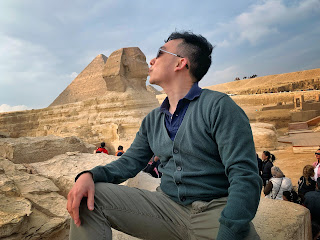
It’s an alright experience too, though a far cry from Egypt. There’s “touristy”, like riding a camel in front of the pyramids, and then there’s “touristy” like building a resort in a desert to invite tourists to ride camels around a compound. 


What’s this? I gotta say, I wasn’t expecting a water park in the desert, or a swimming pool surrounded by sand dunes, but there ya go. As the guide later explained near the end of our trip, Outer Mongolia is a landlocked country and bodies of water are a major attraction for tourists from these areas.


We also watched a play on an Ordos wedding. It’s more interesting than it sounds: one part involved the dancers moving in synchrony while balancing a bowl of water on their heads.

The week that we spent in Inner Mongolia had been interesting. We visited a lot of old towns and rural areas, but in the more modern areas, like the mall that we visited one night, would not have looked one bit out of place in Singapore or in New York. 
On our way back to Beijing, we stopped at Datong 大同市, the closest Chinese city to Inner Mongolia. It’s a peripheral city, but the technology is still staggering. In the city, the Chinese GPS app on the driver's phone doesn’t just give directions and warn of red light cameras; it also tells you exactly how many seconds before the traffic lights at each intersection change. 


One place we visited in the Datong region was Yungang Grottoes, a complex of shrines and Buddha statues. We were warned that this place is very popular and full of tourists, though we lucked out: it was serenity when we visited.


This place has Egypt vibes. The statues and rooms were carved into the rocks from over 1500 years ago. There’s a fair bit remaining, though like Egypt, some parts of the sites has been degraded by time and nature and a fair bit of banditry.


Here and there along our journey, along little streets, I spotted some traditional snacks that I’d had in my childhood but not seen since. There are hard caramel candy, shaped into animals and dragons. There’s hand-pounded peanut candies too, both of which are like little remnants of history from a rapidly advancing country.


We went to Datong Old Town both in daylight as well as at night


In the daytime, it’s a tourist spot with architectural relics from the Ming dynasty. We walked around the area in the morning, and had lunch at 喜晋道面馆. It was the best meal we had on our entire trip. The restaurant had been mentioned on the Chinese social media platform 小红书 xiaohongshu, so I had been keeping a look out for it. But I was clued in to its location by the huge amount of people outside the storefront sitting on chairs and waiting for a table. Their specialty is the 刀削面, noodles made by shaving strips off a large piece of dough directly into boiling water with a curved blade. The noodles at this shop is more pleasant than any others that I’ve had: each strand is chewier and thicker. The meat pieces are tender and flavourful. And don't miss out on their skewers - both their lamb and beef skewers are equally fantastic.


Datong belongs to a larger province named Shanxi 山西, which is renowned for their vinegar. I've had some vinegar ice cream. It's not as strange as it sounds; after all, aged balsamic vinegar can be drizzled over ice cream.


We returned to this area in the evening, which is quite a different experience than in daytime. There are less tourists for one, and many more locals. Many food stores are only open from evening onwards, selling food and drinks, and live music pours out of the bars. We walked around after dinner and ate perfectly cooked roasted drumsticks from a store named 茶熏鸡腿 (the queue in front of the store clued me in that I should definitely buy their drumsticks), and slurped down milk tea as we walked down the roads. We walked past 東空間, and the jazz song from beyond the doorway made us stop in our tracks. We stepped in. Tables and chairs are set up along the alleyway, and we took a corner table facing the singer. She’s good. Very good. The bar where we order drinks is just behind a glass panelled door, a sliver of space for a countertop and bar stools. And there you have the bartender. There’s those boisterous kind of bartenders, like the ones we met in PS150. Then on the other end of the spectrum, there’s her.

She's cool as a cat. 


And as the singer finished her set, and as we finished our drinks and the bar started to wind down, we left the area, our perfect night in Datong.