Chik's Crib

22 November 2023

The Sanchaya, Bintan, Indonesia

November 22, 2023 0
The Sanchaya, Bintan, Indonesia

The beaches of Sanchaya, at low tide.

What a holiday. It’s with absolutely no exaggeration to say that this is the most opulent resort I’d been to. It was with some skepticism when I read reviews 
on TripAdvisor declaring The Sanchaya to be the most luxurious resort - ever, on a global scale, bar none. I'm naturally a skeptical person. But now that I’d experienced how responsive and proactive the staff are, I see what they mean. I hadn’t think resorts with such services exist, but then again, I’d not been to The Sanchaya before.


Being under an hour’s ferry ride away from Singapore, this resort is The Place To Be to celebrate significant life milestones. As we disembarked from the ferry, we were whisked away to a separate customs office. Our paperwork were expedited, and the private customs office led straight into The Sanchaya’s lounge, where we were served refreshments and snacks as we waited for our ride to the resort.


The resort is just a 10-minute drive from the ferry terminal. While check-in is at 3pm, we arrived too (?) early at 10am (It's my compulsive anxiety.) I was prepared to wander around until our check-in, but to my most pleasant joy, the staff made an astonishing amount of accommodation for us: we got the keys to our villa at 11am.


The first indication that The Sanchaya was a cut above other resorts was the tranquility. There was no crowd, no boisterous parties and no kids running amok. As we walked around, we heard the sound of scattered conversation, of wooden mallets striking croquet balls and of insects chirping in the dusk. It’s entirely peaceful. Each room was also wonderfully soundproofed: even when we were expecting rainfall on an afternoon when we stayed in, we realised it had rained only after we stepped out of the villa and saw that the ground was wet.


The astonishing cleanliness was something I appreciated deeply. I’m always a little wary of hotel room floors, but this was the first time that I felt the floor was clean enough to walk around barefooted. The staff too, routinely leave their shoes at the front step when they enter our room. I walked out barefooted even onto the balcony, which was spotless even despite the water lily pond, which lies just beyond our deck.

The back of our villa faces a water lily pond. The water lily flowers bloom in sunlight and close up at dusk.

The most outstanding part was its bespoke services. 
Over our stay, never once we were asked for our room number; the attendants recognise our faces and place us to our names and room number by sight. On one memorable occasion when the hotel staff wanted to run our dinner plans by me (I had previously arranged for the dinner over email), they had a near-preternatural ability to know exactly where to find us. We were strolling along the beach picking seashells on our first evening, and one of the resort managers came out to the beach and joined us first for small talk, then progressed to discuss the dinner reservations: because the sky was overcast, he wanted to check if we wanted to postpone our beach dinner to another night. 


As we walked along the beach under the overcast sky, another passing attendant spotted us and came over to offer an umbrella.


By the pool, fresh folded towels are preemptively placed on poolside chairs, and tables have small bottles of insect repellant for guests to use. When we went for a swim in the pool and afterwards returned to our belongings, we found that an attendant had set down a picnic basket for us; inside, there was bottles of still and sparkling water, chilled glassware and lime slices, as well as sunscreen and moisturiser. 


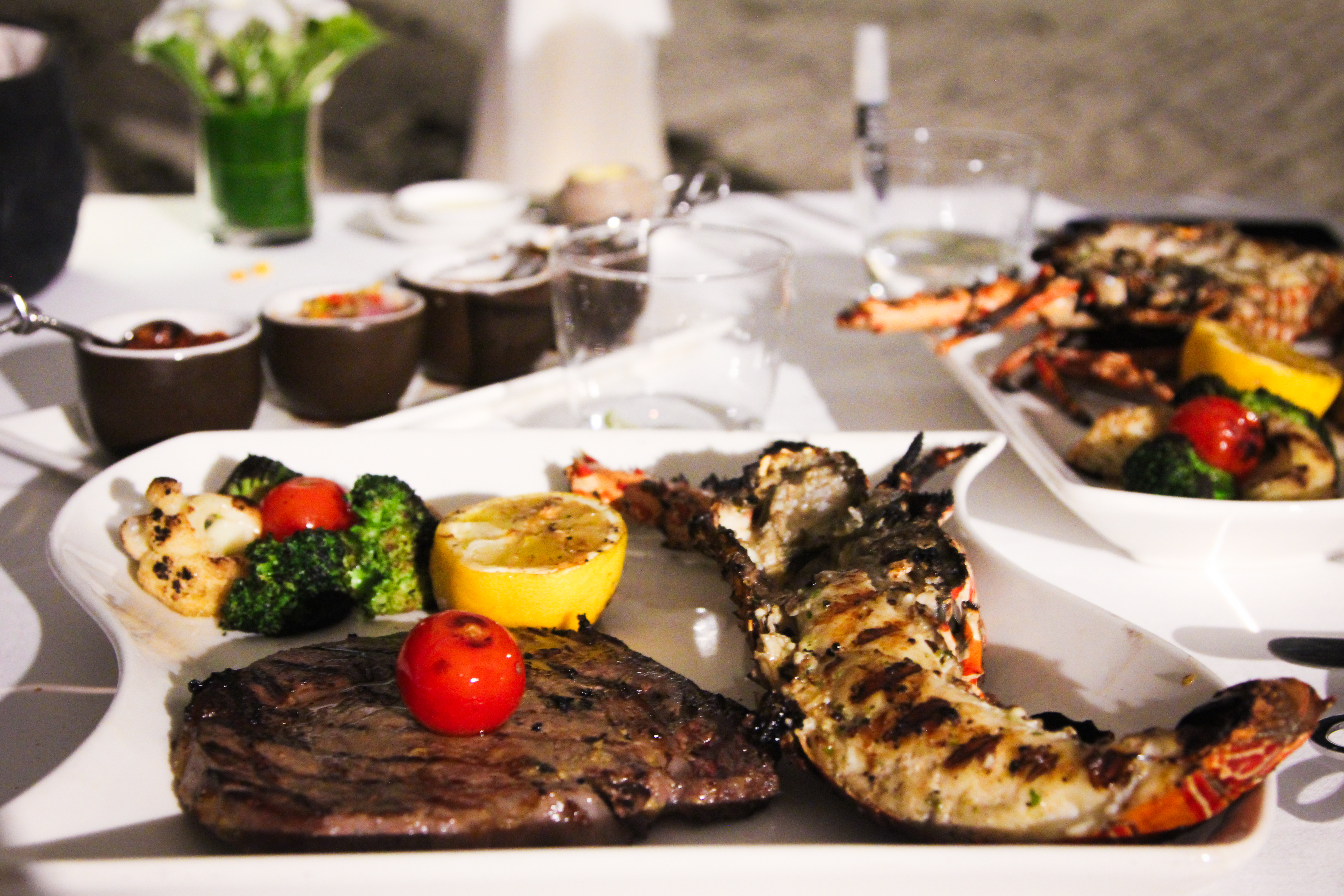
As dusk fell, we headed down to the beach for the Kong Ming Dinner, a private beachside 9-course dinner for two. The sun had just set, and the sea breeze from the horizon was cool on our skin. I had imagined that the food would be cooked in the resort’s kitchen and then brought out to us. But again, The Sanchaya aims to over-deliver. We got a private chef, who manned the grill downwind from our canopy, and his team who kept the dinner running smoothly. 


The meal was a fine-dining experience: we started off with the obligatory warm bread rolls and churned butter, and progressed onto sashimi, smoked duck, an octopus salad and foie gras. As dinner moved from appetiser to mains, we were served lobster, ribeyes, chicken and grouper fillets from the grill. The food were beautifully seasoned and the caramelised grouper fillet in particular was faultless. It was perhaps the best fish that I’ve ever had. There was the undeniable sweet scent of Kaffir lime (I’m undecided if it was the leaves or the zest), and each bite was accentuated with a light crunch of sugar along the edges of the fillet. Each protein was a full-sized portion, and the whole affair was a spectacle that honestly could have comfortably fed at least 4 people. The staff were gracious enough to set up an additional bonfire for us by the beach, and as the dinner wound down, they brought out a paper lantern for us to release over the beach. It was indeed, a perfectly arranged event, and one could not have asked for more. 


We spent our days enjoying the facilities. The beach is one of the best; the sand is so soft, I feel my heel sinking a couple of inches in with each step along the shoreline. In the waters, the sand becomes almost like one of those non-Newtonian fluids that become more viscous when you apply more force (anyone else played with cornflour slurry in their childhood?). We took paddle boards out along the coastline of Lagoi Bay in the morning. When it got too hot in the midday, we played croquet in the partially shaded lawn, or retreated to the bar to play traditional game of Mandala. There’s also a beautifully decorated library, with two volumes of cookbooks from The Sanchaya, where I tried in vain to look up the recipe for the caramelised grouper with kaffir lime. No such luck. 


I challenged a golfer to a croquet game. Mistakes were made. 

In the evenings, we cycled around the scenic lake, or walked the beach during the intertidal phase, where we saw hermit crabs and the likes in the clear water


Turn-down service happens twice a day. In the mornings, two bottles of freshly squeezed fruit juice are delivered to our room along with local snacks and fruits. In the afternoons, an attendant comes by with fresh pastries. When we checked in, I made a comment about how I like fresh milk with my coffee, and for the next few days, the tea-time pastries came with an additional pitcher of milk in case I wanted to add it to my afternoon coffee from the in-suite espresso machine.


We spent a lot of time lounging around the room enjoying the ‘Maxibar’: the beverages are refilled daily (even the alcohol!). I brought along a bottle of Prosecco (my girlfriend laughed at me, but in the end, she drank the most), and we thoroughly enjoyed the full set of Riedel glassware, bottle opener and vacuum wine stoppers that had been thoughtfully laid out for guests beforehand. For the budding cocktail enthusiasts, you should bring along a selection of spirits. One particular day’s fresh fruit juice - a combination of pineapple, ginger and orange juice - made the perfect cocktail base. We enjoyed it with the travel-sized bottles of whiskies that I brought along,
souvenirs from my Boston trip. I also loved the fact that part of the maxibar included two complimentary full-sized bars of chocolate from Janice Wong, which we devoured.


Even as I’m typing this one week later, I am still blown away by how great the staff are: they went to lengths to make sure that we had a great time. There were handwritten notes from the staff regarding our check-in and check-out time (hand-delivered, of course). And even after we had checked out and are lounging by the side of the pool before our transport to the ferry terminal, the staff brought out drinks for us. We were charmed by how gorgeous and photogenic the estate was, and when the staff saw us taking pictures, they would also offer to help us with our photography - even during when we were paddle boarding, or on the drive back to the ferry terminal, where the driver stopped by the scenic lake for us to have one last photography session.


It was a dreamy long-weekend vacation, and it was simply outstanding. There’s The Sanchaya, and then there’s everybody else.


29 October 2023

David Lebovitz's Tarte Sablée au Chocolat Recipe

October 29, 2023 0
David Lebovitz's Tarte Sablée au Chocolat Recipe


My usual chocolate tart is a recipe from Alice Medrich, with a smooth velvety chocolate filling made from cream. This makes a different sort of chocolate tart: the filling is also rich, but the texture is fluffy and billowy, with a almost brownie-like crust.  

Daily life often gets in the way of baking. I don't always have time to bake when I have a particular dessert craving, or more frequently nowadays, I want to bake something but I'm too full to eat it on the same day. So I channel my baking urges into making dough, which can be portioned and frozen, ready to be baked off on a whim on another day (much like the apple pies that I'm fond of making.)  Use a good chocolate, and give this tart a whirl. 


Tarte Sablée au Chocolat Recipe
Original Recipe from David Lebovitz

Ingredients
Sablée Dough
100g (3 1/2 ounces) unsalted butter, cubed, at room temperature
75g (6 tablespoons) sugar
pinch of salt
1 large egg, at room temperature
170g (1 cup plus 3 tablespoons) flour

Filling
150g bittersweet (not unsweetened) chocolate, coarsely chopped
100g unsalted butter, cubed
30g sugar
1 large eggs, at room temperature
2 large egg yolks, at room temperature

STEPS
The Tart

1. Using a spatula, combine butter, sugar, and salt. Add the egg and mix until mostly combined, then add the flour.

2. As the mixture comes together to form a dough, shape it into a disc and wrap it with clingwrap. Chill the dough in the fridge for 30 minutes before continuing with the recipe. 

3. On a well-floured surface and rolling pin, roll out the dough until it’s 13-inches (33cm) round. Drape it over the rolling pin and transfer the dough onto a 9- to 9 1/2-inch (23cm) tart pan. Patch up any cracks in the dough. Gently press the dough up against the wall of the mold using a spare bit  of dough, then trim off any excess. With a fork, prick the bottom of the dough all over. Freeze the dough in the tart pan for at least 30 minutes. (The dough can be frozen as a disc (step 2) or after it had been pressed into a tart pan, to be used at a later date within the month.)

4. Preheat the oven to 190ºC (375ºF). Line the tart pan with foil and fill with pie weights. Bake for 20 minutes, then remove the foil and weights and continue baking until the inside of the tart is lightly browned, about 8 to 10 more minutes. Remove the tart shell from the oven. Any cracks in the tart can be patched up using excess dough scrapes. 

The Chocolate Filling
5. As the dough is baking, melt the butter in a small saucepan set over the lowest possible heat. Just as the butter finishes melting, add the chopped chocolate and stir briskly, until the chocolate melts. If the chocolate is at risk of burning, remove the saucepan from the heat and continue to stir, until it is safe to return the saucepan to the heat. You can use a double boiler if you wish. Remove the saucepan from the heat once the chocolate fully melts. Set aside.

6. Using an electric mixer set at high speed, whisk eggs, egg yolks, and sugar together for about 3-5 minutes, until the mixture is thick and can briefly hold its shape.

7. Gently fold the eggs into the chocolate mixture, then pour into the tart shell and bake at 180ºC (350ºF), for 10-12 minutes, until the tart feels almost set in the center when you shake the tart. Err on the side of underbaking rather than overbaking. 

8. Allow the tart to cool to room temperature, then slice into wedges and serve.

Tips:
Extra filling can be baked at 180
ºC in little ramekins. Excess dough can be rolled out, cut into shapes and baked off as sablés (butter cookies)


22 October 2023

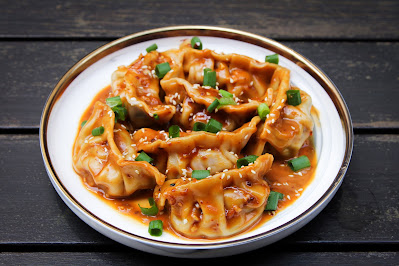
Peanut Butter Chili Dumplings Recipe

October 22, 2023 0
Peanut Butter Chili Dumplings Recipe

I was stunned the first time I had such a sauce combining peanut butter with chili. It was in 2016, when Miss XS and I patronised New Shanghai in Melbourne. We quickly became regulars, and even when we left Melbourne, the thought of the sweet-spicy peanut sauce stayed with me. Recently, I’ve seen this sauce served with handmade 拉面 (la mian, hand-pulled noodles) served in a hearty bowl. 


Much like the sesame-soy sauce, this sauce also comes together within minutes, in the time while the dumplings are cooking. 

Peanut Butter Chili Dumplings Recipe

INGREDIENTS
1 large clove of garlic, minced. 
2 teaspoon smooth peanut butter
4 teaspoon soy sauce 
1 teaspoon black rice vinegar
2 teaspoon chili flakes and chili oil, such as 老干妈 Lao Gan Ma
½ teaspoon sesame oil
2 teaspoon boiling water, adjust to consistency 
Sesame seeds, whole peanuts or chives (for garnish)

STEPS

1. In a medium sized bowl, add everything except for the boiling water and sesame seeds.


2. Adding a spoonful of boiling water at a time and stirring vigorously between each teaspoon, combine the ingredients together. The boiling water helps to emulsify the ingredients into a smooth paste. Continue until reaching desired consistency. 


3. Drained cooked dumplings and mix in with the peanut sauce. Plate and garnish with sesame seed, whole peanuts and chives. Serve immediately. 

10 October 2023

Huangshan, Anhui (黄山, 安徽) - A Trip in Autumn, 2023 (Part 2)

October 10, 2023 0
Huangshan, Anhui (黄山, 安徽) - A Trip in Autumn, 2023 (Part 2)


On our way back to Shanghai, we detoured to see several attractions along the way. It was raining when we reached Yaowan Village (
婺源瑤灣景區). In the cool chill that the rain brought along, the mist rose off from the distant treetops in a cool ethereal glow. 


Anhui isn’t a wealthy province. The land is mostly mountainous and the rocky terrain makes for poor farming. Naturally, the cuisine is rougher around the edges compared to other parts of China. As we travelled along villages in the rural areas, we kept our expectation of our meals realistic. But there are still a few interesting food items. Preserved food plays a big role in their diet. We tried the preserved fish 臭鳜鱼 (cou gui yu, or in a direct translation: smelly fish) and the fermented tofu 毛豆腐(mao dou fu, “hairy tofu”). Both are surprisingly mild tasting, and the fish is surprisingly firm-textured and not mushy like I feared. It’s also a common sight to see pork legs hanging from ropes and air-curing in the open air. While not as renowned as the Jinhua ham, this cured pork shows up in the dishes that we eat: sliced and stir-fried alongside vegetables, or found in the midst of a tasty broth. 

臭鳜鱼 (cou gui yu)

Pan-fried 毛豆腐(mao dou fu)

Raw 毛豆腐(mao dou fu)


Along our tour through the province, we bought boxes of 微墨酥 (wēi mò sū), pastries made of ground black sesame and baked into slabs. Anhui has historically produced the greatest number of imperial scholars in ancient China, and several of the local pastries reflect this theme. The 微墨酥 resembles ink-stones used for writing.  状元糕 (zhuang yuan gao, Imperial Scholar Cakes) is another dessert here: steamed glutinous rice pastries filled with custard or red bean paste and embossed with a scholar seal. They’re sticky and delightfully chewy. 


状元糕 (zhuang yuan gao)

Perhaps the most popular pastries are the spiced 黄山烧饼 (Huangshan baked biscuits), which are traditionally baked in a clay oven. Pre-packaged ones can be found almost anywhere in Huangshan, but along Tunxi Ancient Street, you can also get those that have been baked fresh on-site. 


We went to a few restaurants to sample the local hui cuisine, but no meal we had was quite as memorable as the one from the Hui Cuisine Museum. It is a state institution, with all the funding that comes along with it. As we walked into the sprawling complex, we went past an ongoing one-man opera, past a more casual eatery, past a museum detailing the history of the land, past a supermarket selling local delicacies and cured meat, before finally reached the restaurant. The servers appease the customers in most restaurants, our tour guide remarked drily, but in state-run restaurants, it is the other way around. Like all jokes, it had a kernel of truth in it: during our dinner, the server politely declined to exchange our provided coke for another bottle of beer.


We also spent a night in the town of 千岛湖 (Qiandao Hu, Thousand-Island Lake). This area used to be a mountain range, but the mountains and their valleys were flooded with water in the 1950s and the area converted into a hydroelectric dam to provides clean energy to the region. The “islands” that we now see were the summit of mountains. Today, the lake is also a tourist location and used for fish rearing.  

Another pun: So how much water is required to create this lake? 一湖的水)


The lake is pretty, and the weather was perfect for a day out on the lake. But the overtly-tourist vibes was a little off-putting. The town employs specialised tour guides to bring us around the lake, and so our regular tour guide skipped this part of the tour. When he met up with us afterwards, he was refreshingly honest as usual and told us the local saying about the lake: 一生没来到千岛湖,终身遗憾。来到了千岛湖,遗憾终身。(If you spend your life without coming to qiandaohu, you will regret this all your life. If you come to qiandaoyu, this you will also regret all your life.) Anyhoo, we were done and headed on to Shanghai. 


After over a week of traveling around rural China, I was ready for a change of pace. And stepping into Shanghai was just the thing I was looking for. We have a full day for sightseeing, and we definitely made the most of it. 


城隍庙
 (cheng huang miao) is a Taoist temple dedicated to the 城隍 deity of the same name. The temple is still around, but due to its central location, a bustling shopping district has grown around the temple. Within the district, 南翔馒头店 (nan xiang man tou dian) is one of Shanghai’s oldest establishment selling 小笼包 (xiao long bao), the thin-skinned, soup-laden dumplings that we all know and love. Shanghai is the birthplace of this dumpling, and coming to this restaurant is definitely number one on my to-do list. We headed over for lunch, where we had baskets upon baskets of freshly steamed dumplings.  We also tried the 蟹黄灌汤包, a super-sized version of a 
小笼包 xiao long bao (大笼包?), each about the size of a palm. A paper straw is given to drink the fragrant crab soup, and then we feasted on the dumplings. 


西湖龙井


Amongst the other restaurants along the district, we were also recommended 宁波汤圆 (ning buo tang yuan, glutinous rice balls). These are filled with sweet osmanthus (桂花, gui hua) and black sesame.  


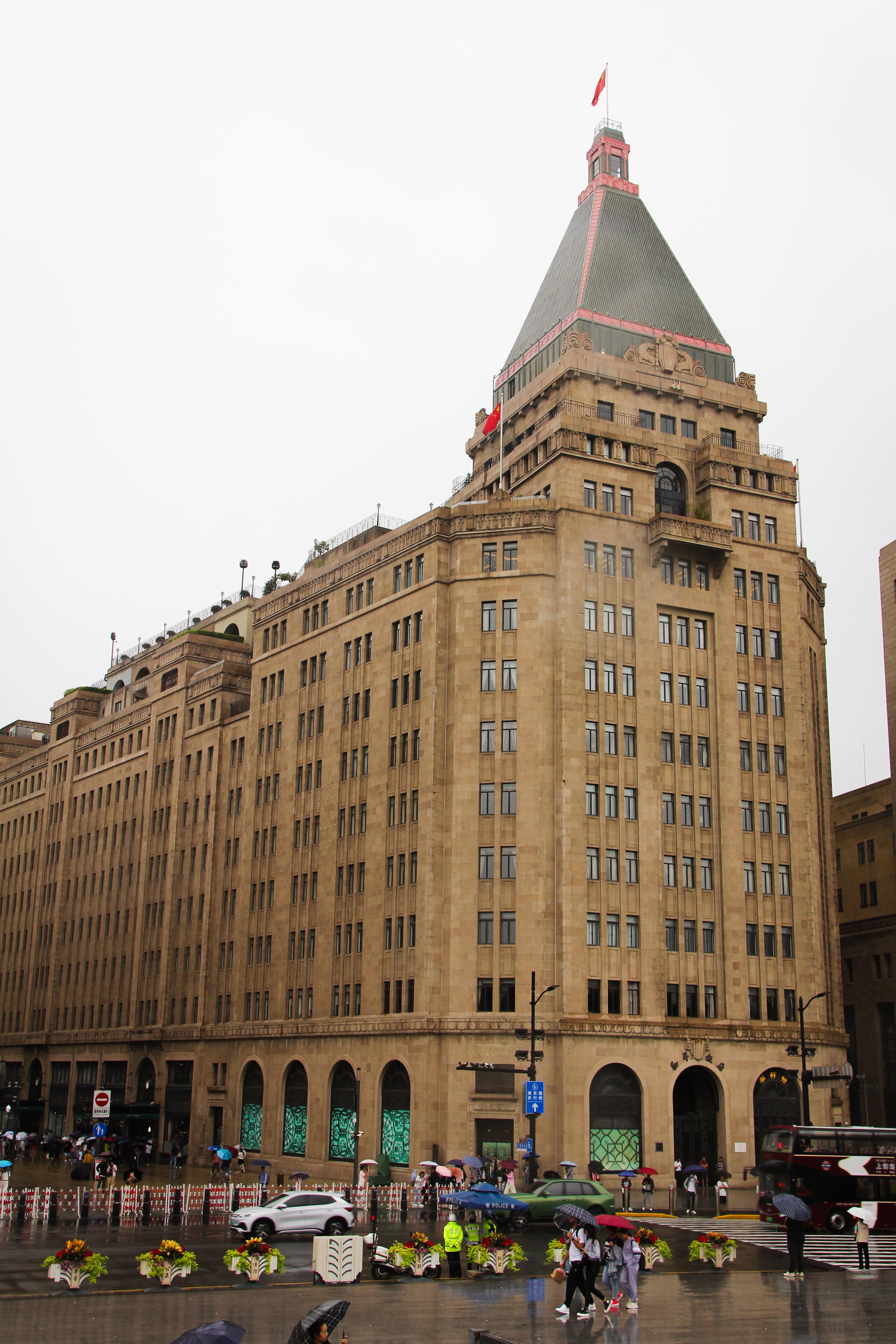
As we walked down Nanjing Lu after lunch, we reached the Bund, also known as Waitan (外滩). It’s the stretch of waterfront along the Huangpu River, land which had been conceded to the various colonial powers in the aftermath of the Opium War. The colonial powers brought their architectural styles to the building that they had built, and today, styles from Romanesque to Baroque can be seen. 


Peace Hotel, 上海和平饭店

The Bund


Our exploration of Shanghai also brought us to 小杨生煎包 (Yang’s), where I had some truly spectacular 生煎包 (shen jian bao, or pan-fried dumplings) at teatime. 


And later, as night fell, we made our way to the ferry terminal for a night river cruise. The rain was miserable, and fog shrouded the tops of the buildings. But for one brief moment, at the right moment, the rain let up. 


It had no doubt been a rough few years for the country. Five years after the start of pandemic, it’s a country that is still trying to find its feet. The economy is floundering after the prolonged lockdown, and even as we travelled around China, many of formerly bustling tourist areas such as Tunxi Ancient Street and Liyang Old Street are a shadow of their former selves. But their march of progress is incredible. Everywhere we look, from first-tiered cities like Hangzhou and Shanghai to rural areas, I see a cleaner, greener future. About half the cars that we saw were electric, and electric scooters and charging points are commonly seen within the cities. 


We didn’t have more time than to do just a quick tour of Shanghai, which is a darn shame, because I’m sure there’s so much more to the city than what I saw. It’s a sprawling metropolitan, a city about eight times the size of Singapore. It’s easy to forget that the landmass of China is huge; it’s almost the size of Europe, and contains about 20% of the world’s population (and consumers). So let’s not discount China quite yet.