Chik's Crib

22 May 2023

Hojicha Whisky Tiramisu Recipe

May 22, 2023 0
Hojicha Whisky Tiramisu Recipe


Koal in Singapore has a stellar reputation for their grilled food with Asian-inspired flavours. Its reputation is well-deserved. It was recommended to me on several occasions by Miss XS, and when I finally went, it did not disappoint. 

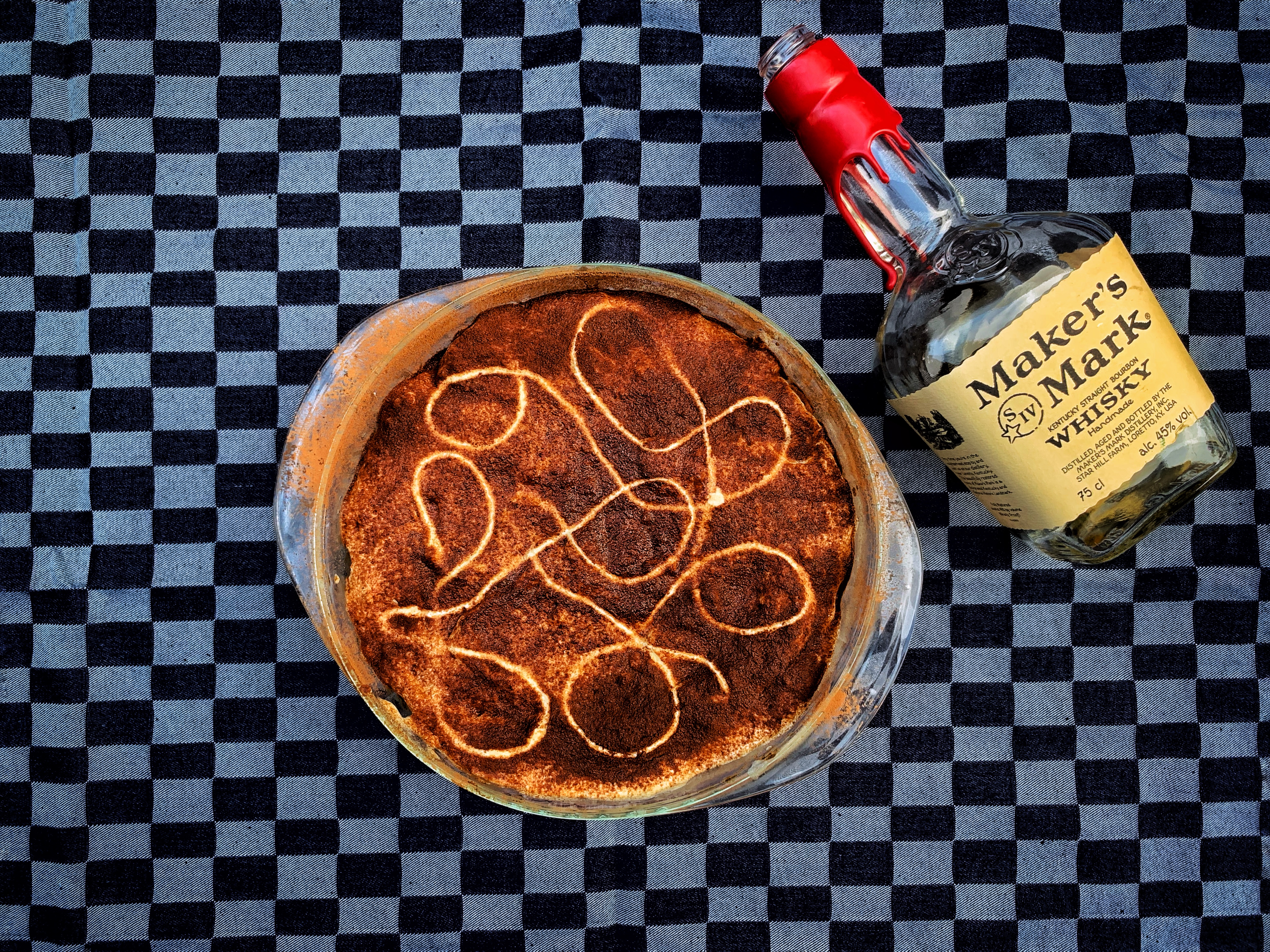
When desserts came about, I was blown away by their Hojicha Whisky Tiramisu. Three words that I never would have associated together, but it worked. It was earthy, it was rich, and it was perfection in a cup. 

I scoured the internet afterwards for a similar recipe, but couldn't find any desserts that combined both hojicha and whisky. Until I rolled up my sleeves, and decided to get to it myself. In my sixth month, and on my sixth iteration, I got it. 

One tip for making tiramisu, after all my tries, is to err on the side of choosing smaller vessels to hold the tiramisu. You want to avoid overestimating the amount of tiramisu that you can make, and end up with a flat, single-layered tiramisu, as it does not look or taste as appealing as a two-or three-layered one. If you truly have an excess, break out the dessert bowls to make single size portions, which always look good.

In this recipe, I took the controversial step of stipulating "3.6 eggs", and I look forward to the fan mails. The reason was that I scaled the recipe to a tub of mascarpone, which goes for 500g around these parts. The original recipe uses 5 eggs and 680g of mascarpone (both much more reasonable numbers) but I could never figure out what I was to do with the remaining mascarpone. So instead, I crack an egg, mix the egg white and yolk around and then spoon out a little less than half to store in a tupperware. It worked out really well so far. 

Hojicha Whisky Tiramisu
Tiramisu recipe adapted from Stella Parks
Inspired by Koal

You may notice measurements in both weight and tablespoons, which is a deliberate choice. I weigh sugar and mascarpone, but unless you have a jeweller's scale, you're going to have a high margin of error weighing hojicha powder. I use a standard US tablespoon for this recipe. The other benefit of using volumetric measurements is that it is easily scalable by using a larger or smaller spoon.

INGREDIENTS

2 tbsp hojicha powder, plus more to layer and top the tiramisu 
3 tbsp whisky
11 tbsp water  
500g mascarpone 
3.6 eggs
70g sugar
1/8 tsp salt
About 20 Ladyfingers

STEPS

1. In a rimmed plate wide enough to accommodate a full-length ladyfinger, combine hojicha powder, whisky and water. Set aside

2. In a tall metal saucepan, combine eggs, sugar, and salt with a spatula. The eggs are to be cooked in a water bath to minimise food-borne illnesses. Fill a large skillet with an inch of of water (leaving ample room for the metal saucepan to sit in the water without causing water spillage), and bring to a boil. Turn down the heat to medium, and place the saucepan into the waterbath. Allow the eggs to come to 160°F (71°C), scraping the bottom of the pan constantly to prevent the eggs from overcooking. This should take about 5 minutes; a lack of progress means you need to turn up the heat.

3. Remove the saucepan from the water bath, and strain the eggs (to sieve out any bits of curdled eggs) into a bowl set into an ice water bath. Let the egg mixture cool, until it's no longer warm to the touch.

4. Using either a handheld mixer or a stand mixer, whisk the eggs on high speed for 5 to 10 minutes, until they have more than quadrupled in volume and are thick enough to briefly hold its shape when dropped from the whisk. Reduce speed to medium and add mascarpone, about 1/4 cup at a time; no need to wait for the mascarpone to completely incorporate before adding more. Scrape down the sides and bottom of the bowl, and then continue whisking for a couple more seconds to break the big chunks of mascarpone down into smaller bits. The small flecks of mascarpone will smooth out on their own afterwards.

5. Assemble: Dunk each ladyfinger in the hojicha/whisky mix, giving it about 5 seconds to absorb the liquid, then place in the bottom of your bowl. Add a  layer of mascarpone filling (about 2cm in height), and then dust lightly with hojicha powder. Repeat with the ladyfingers, then the mascarpone and then a final coating of hojicha powder over the top. Cover and refrigerate overnight before serving.  

Storage for excess ladyfingers: Ladyfingers, once opened, should be kept in the fridge or frozen if you live in a humid climate.   

Variations: In lieu of Hojicha-Whisky, another winning combination is Bailey's Irish Cream and espresso, mixed in a 1:1 ratio.   


08 May 2023

Vietnamese-American Garlic Noodles Recipe

May 08, 2023 0
Vietnamese-American Garlic Noodles Recipe

Fish sauce may have just become my new favourite ingredient. Ever since I discovered this wonder-sauce in Vietnamese Caramelised Chicken, I've been adding it to just about everything I cook, from scrambled eggs to tomato soup (for hot pots). So far, there hadn't been a savoury dish that did not  benefit from a splash of fish sauce and its ensuing unami-bomb.

My latest favourite-est dish is this garlic noodles from the New York Times, which is adapted from San Francisco’s cult-darling restaurant Thanh Long. It's a fusion Aglio e Olio, one that had been glowed up with Vietnamese ingredients and featured a double-hit of unami from fish sauce and pecorino romano.

I’ve made this a few times over the year, and eventually came about to this final iteration. First up, I’ve dialed up the amount of Pecorino, because the original proportion was a little scanty for my taste. Second, I've sautéed the garlic with olive oil instead of butter. A neat trick for jazzing up spaghetti, one that I'd learnt from Carmelina in Boston, was topping each plate of spaghetti with pan-fried bread crumbs. Store-bought roast ducks also go perfectly well alongside these noodles. The version (pictured above, with the recipe below) is served with sliced mushrooms, fresh chives and fish roe, and is my preference when I could get my hands on fish roe. 

Vietnamese-American Garlic Noodles
Adapted from Kenji Lopez's article in the NYT: San Francisco-Style Vietnamese American Garlic Noodles 

INGREDIENTS
4 teaspoons oyster sauce
2 teaspoons light soy sauce 
2 teaspoons fish sauce
4 tablespoons of olive oil, plus more for sautéing mushrooms
20 medium garlic cloves, minced or smashed in a mortar and pestle
1 pound dry spaghetti
200g mushrooms, sliced
chili flakes for seasoning
150g Parmesan or Pecorino Romano, grated
A small handful of thinly sliced scallions 

STEPS
1. In a small bowl, combine oyster sauce, soy sauce and fish sauce. Set aside. 

2: Set a wok or a large skillet over low heat. Add olive oil and garlic, letting the garlic cook gently without browning (about 2 minutes). And as an exuberant Frenchman once said, to cook the garlic until its aroma can be smelled, and then then lock in the flavour by putting liquid. In this case, add the soy sauce mixture and remove from the heat. Stir to combine and set aside. 

3: In another large skillet, bring 1½ inches of water to a boil. Salt the water with a teaspoon of salt, and then add the pasta. Cook pasta to al dente; remove pasta from the saucepan 2 minutes before the recommended cook time on the pasta package. 

4. As the pasta is cooking, place a small skillet over medium heat. Add olive oil, then add sliced mushrooms and season with chili flakes. Cook until tender, then remove from heat and set aside.

5. When the pasta is ready, remove the pasta from the boiling water and add it to the saucepan containing the garlic sauce. (I use tongs, and any amount of pasta water that comes along with the noodles is welcomed. Don't toss the pasta water away!) 

6. Add cheese to the pasta, and stir vigorously until the sauce is combined and creamy. If the cheese starts to clump up, splash a bit more pasta water into the saucepan, which would help the emulsification process. Add in the cooked mushrooms and scallions (if using) and serve immediately.

16 April 2023

Seared Tuna with Sesame-Seed Crust Recipe

April 16, 2023 0
Seared Tuna with Sesame-Seed Crust Recipe


Ever since the summer of '19, where a
 younger and more impressionable version of myself had a seared tuna fillet in Santa Monica Oyster Bar in California, the dish had been living rent-free in my head. Yes, it's a dish which had its hey-day in the '90s, but in my defense, I wasn't born yet. Late is better than never, and thirty years down the road, I'm just discovering how good the classics can be.  

Because the tuna is served raw in the middle, it's worthwhile to find sashimi-grade tuna from a place that you trust. What complicates things is that the term 'sashimi-grade' is entirely unregulated, and any mishaps in the cold-chain, a term we are all familiar with after COVID, may run the risk of eating bad raw fish. Do get your sashimi from a reputable source.

Sesame-Crusted Seared Tuna 

INGREDIENTS
Tuna fillet, 
sashimi-grade, ideally about 1-inch thick

1/2 tsp salt 

Black and white sesame seeds

Olive oil

1/2 lemon


STEPS

1. Set a non-stick frying pan over high heat. Add olive oil. 

2. In a plate or large bowl, combine the sesame seeds. Salt the tuna fillets and coat the tuna with sesame seeds.  

3. Sear the flat side of the tuna over high heat for 45s on each flat side, and then a quick sear, about 10s on each of the remaining sides of the tuna's surface.  

4. Remove from heat immediately and slice the tuna with a sharp knife. 

5. Serve over a bed of salad, and squeeze the juice of half a lemon over the dish. 

01 March 2023

In Abu Dhabi, the UAE - A Stopover

March 01, 2023 0
In Abu Dhabi, the UAE - A Stopover


It’s not every day that we find ourselves walking around the capital of the UAE. So what was I doing in Abu Dhabi again? Well, it was our stopover city on our way to Egypt, and were there for a little over a day. One day is not nearly long enough to get to know a city, but c’est la vie.


The first thing that i spotted was Cinnabon, my favourite-est cinnamon roll shop. Now, if only it would come to Singapore… (Edit: they are coming!)


Browsing a foreign country’s grocery store is one of my favourite things to do, and Carrefour in Yas Mall did not disappoint. There was a date booth, stocked with every possible variety of dates and subdivided by their country of origin. We got to try a bunch of different dates while the guy was telling us all about the characteristic of different countries and species (it might have been a slow Thursday afternoon but I’m more inclined to think that it was the famed middle eastern hospitality). I like the Medjool dates, which are the softest and sweetest. There was also a confectionery booth selling confectionery made from camel’s milk, and the people behind the counter were just as quick to hand out samples. Which I took, of course, because I simply had to try. The ice cream is a tad thicker and stickier than ice cream made from cow milk, but I’m surprised to find that taste-wise, came milk is about just as mild as cow milk. The chocolates made with camel milk is just ever so slightly gamier, but still mild. They make great gifts for guys and gals back home, and between the few of us, we depleted their stock.


17% of the city’s population are citizens; everybody else holds a foreign passport and are here for the job opportunities. The low taxes sweeten the deal: VAT, at 5%, is one of the lowest in the world. And working adults may want to sit down for this next part: there is no income tax in Abu Dhabi. It’s a wonderland indeed.


Today, Abu Dhabi is quite the engineered city. Guinness-record breaking skyscrapers line the distant horizon. Their Andaz Capital Gate Tower leans at 18 degree, or as we were proudly told, five times steeper than the leaning tower of Pisa. The Louvre has a presence in this city, as does NYU. In Yas Mall, the first thing we spotted was the eye-catching Rainforest Cafe from the US, and an ongoing Ferrari exhibition. But for all that, away from the latest skyscrapers and closer to the streets, Brutalist-style residential buildings are far more common. Traveling around Abu Dhabi, the roads were pretty empty.


We wanted to visit a few attractions: the Sheikh Zayed Grand Mosque, the Heritage Village and the Andaz Capital Gate Tower. We couldn’t make time to go to the Qasr Al Watan Palace, but we had our fill of the majestic from the Sheikh Zayed Grand Mosque, this splendid white and gold building. It’s a rather long walk from the connected mall to get to the grounds of the mosque, and the walk over was packed with other tourists. But we persevered. Within the mosque, guide ropes and strict guards tell you where you can or cannot stand. But we got there in the end. The mosque was pretty spectacular, especially the prayer hall with the hundreds of lit glass bulbs spiralling around the chandelier.


It’s not going to be a great secret that a place called the Heritage Village is going to be catered to tourists. But still, it’s fun to explore how the olden-days Emiratis lived in the desert. There’s camel rides for those who are interested, and just look at the wee face mask on this responsible camel!


We did find a spot of oasis in the middle of the city. There was white sand and water, and complete with a view of the city skyline. And see how far the land has come.


Read about our travel to Egypt here:

15 February 2023

Egypt - The Trip of a Lifetime

February 15, 2023 1
Egypt - The Trip of a Lifetime

This gal is a little hard headed. Humour's a little too dry. Also cold, stone-cold.   

Well, what more can I say about Egypt? There’s the pyramids, of course. The sphinx and the mummies. The pharaohs and their temples for the old Egyptian gods. Cleopatra and her dalliance with the consuls of Rome. And throughout all of its history winds the Nile River, blessing irrigation and fertility to the soil. Egypt’s definitely on everybody’s bucket list (it certainly was on mine) and touring Egypt had been a whirlwind of emotions. 

Sunlight breaking through the dark clouds and shining down on the pyramid

The official currency is the Egyptian Pound, which just about everybody accepts. However, tourist spots and street peddlers prefer to deal in USD. I like to eat the local cuisine, which meant going to where the locals go. By looking at the menu, it is easy to distinguish if the restaurants are catered to locals or for tourists. If the prices are listed in Egyptian Pounds, you’re in luck. Bonus points if they have trouble finding change in USD, (and in supermarkets like Carrefour, where tourists do not often go to, many of these places outright do not accept USD. It’s Youtrip to the rescue.) Some larger businesses may have the equipment to handle credit or debit cards, but cash is still king here. 

We went in February, which was in the tail-end of their winter, and was perhaps the best time to visit Egypt. The overhead sun still burned at our bare skin, but the ambient temperature was a cooling balm at 10+ degree Celsius. I wore a simple T-shirt with a coat, and occasionally a scarf, which was adequate protection from both the chill and the sun. Visiting Islamic mosques also required long pants, and I couldn’t imagine making the journey in their summer, when the temperature can go up to 50C.


The old world charm was much alive and well in Cairo - when our group touched down, our local guide was waiting with fresh roses for the ladies in our group. He guided us through customs, and using official documentations and no small amount of charm, we skipped past the metal detectors and baggage checks. 


Egypt’s economy is in a delicate situation. Our guide estimates the unemployment rate at 25%, which is a hefty size of the population. Still, everybody that we met here was hardworking, and the young adults doubly so.

I was a little flabbergasted as we drove through Old Cairo. Rubble filled the streets, and many of the buildings that we passed by were in various stages of incompleteness, disrepair and/or collapse. Many multi-storied buildings were little more than 4 sides of naked bricks held together with cement, with holes in the walls where windows should be (as the video above showed). Cement and bricks dangled precariously from steel cables down the sides of the buildings. When we pointed these out to the local guide, we were met with a shrug. It’s common to build only what you need at the time, he says, and leave the top incomplete. When they need more space, for example if their children got married, then the homeowner will add an additional floor to their house. Plus, they don’t have to pay housing taxes as long as their house remained “unfinished”.


No one was quite as stoked as me when we reached the Egyptian Museum and saw the treasures from the tomb of Tutankhamun. The tomb held particular historical significance: discovered in 1922, it’s the only tomb of a pharaoh that had been found intact, with all the treasures that were buried together with a pharaoh. Aside from the sarcophagus and the golden funerary mask of Tutankhamun (located in the photography-free zone of the museum), there are collections of hieroglyphs carved in stone tablets, and finished products made from sculpting and metallurgy techniques that had been perfected by a civilisation from over 5000 years ago.


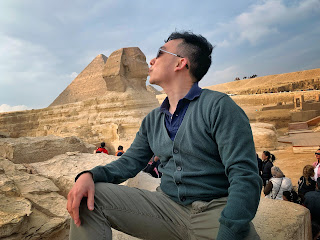
And what’s a trip to Egypt without going to the pyramids? The Great Pyramid of Giza stands at 139m, a considerable flex of architecture feat. Estimated to have been built in 2600-2500BC, it is the final resting place for the Pharaoh Khufu. The two smaller pyramids are the Pyramid of Khafre, and the Pyramid of Menkaure, both housing his descendants and pharaohs in their own rights. It’s mind-blowing how far the ancient Egyptian dynasties stretched back. We think of Cleopatra as a being from ancient times, but in context to Egyptian history, the pyramids were already over 2500 years old when she was born. Her own archeologists were possibly exploring the Great Pyramid of Giza during her lifetime. On the grand scheme of humankind, Cleopatra (69-30BC) lived closer to the age of iPhones (AD 2007, 2000 years later) than the building of the Giza Pyramid (2600 and 2500 BC, or 2500 years earlier). When each square boulder in the pyramid comes up to your chest, it’s an inexplicable sense of wonder to look up at the structure and be amazed at the human ingenuity that it took to accomplish it. 


We also visited the Pyramid of Djoser, the OG pyramid, or officially, a “proto-pyramid”, with the experience gained from building these going into building the future generations of pyramids that we’ve came around to recognise instantly. 


When in Cairo, one also simply have to explore the sprawling marketplace that is the Khan El-Khalili bazaar. Like Chatuchak Market in Bangkok, it is virtually impossible to walk down every stall. And just like Chatuchak Market, haggling is expected. One TripAdvisor review mentioned that even after bargaining the price of his souvenirs down by 80%, he found that the ones sold at the airport were still cheaper. But the best thing to do in Khan El-Khalili bazaar didn’t involve any haggling. In one of the alleyways, at a small corner shop, I had my best meal in Egypt: a stuffed roast pigeon from Kababgy El Azhar Farahat. I mentioned in passing to our guide about trying local cuisine, and he promised to bring me to the “best roast pigeon in the whole of Cairo, Luxor and Aswan.” And he was as good as his word. The pigeon meat was fork-tender and perfectly seasoned, the roasted skin crisp with each bite. Even the bones can be eaten, and the bone marrow sucked from the long bones. Tearing off pieces of pita bread, we scooped up copious amounts of Salata Baladi (Egyptian Arabian salad) and tahini (pronounced Tah-hee-nay), and drank deeply from our cups of pigeon broth. Afterwards, we cleansed our palate afterwards with a hot spiced ginger drink - a zanjabeel, the drink that the Quran calls “the promise of paradise”. And yes, by serendipity, these are the very alleyway tables that Anthony Bourdain sat at.


The Egyptian language is no longer used and is considered a dead language. The people speak Arabic, and Islam is the predominant religion in Egypt today, about 80% of the population. The Citadel of Saladin is a 12th century Islamic fortification built to protect the land against incursions from the Crusaders. The citadel stood, and 700 years after, the region had been pacified sufficiently that the Sultan of Egypt commissioned a masterpiece to be built within the fortification: the Great Mosque of Muhammad Ali Pasha, or more simply the Alabaster Mosque. 


Coptic Hanging Church 
The other 20% of the population is Christian. There are two attractions in Cairo with Christian influence. The Coptic Hanging Church was one, which had been named for the way the church was built between two towers of a pre-existing Roman fortress. Around the corner, and slyly hidden below ground, was the Church of Abu Serga, an underground room where purportedly Joseph, Mary and the baby Jesus Christ stayed in for three months while fleeing Palestine.


Somewhere along the busy main street, I capped off my tour of the neighbourhood with my first taste of Arabic coffee (also known as Turkish coffee). Stir in a bit of sugar if you like, let the sediments settle, and voilà! 


One quirk of touring Egypt is the near-constant police presence, but I found myself getting used to them rather quickly. Exiting the airport on our first day, we were met by armed policemen, which was customary for overseas tour groups. As we drove from one city to another, a different policeman would board our coach and escort us along our way through the country. We passed checkpoints, both ones made of concrete as well as temporary ones made of stationary police cars parked across the road. YouTube Vloggers speak of how they would get harassed by the police as they are filming. But for us, we had nothing but positive interactions with the Egyptian police, who were helpful, friendly even. While in Khan El-Khalili, some of us lost their way in the sprawling maze of alleyways, and was guided by a helpful policeman back to the designated meeting point. On another occasion, when one of us fell and broke her ankle in the city, they were at her side within minutes and had called for an ambulance. During the long drives, it was pretty funny how the coach driver was blatantly playing bootleg DVDs in front of them.


We made the 6-hour long journey from Cairo to the coastal town of Hurghada, powered with a latte from Vasko (great) and popcorn from Kukuruza (not great). Hurghada borders the Red Sea, and is popular with both locals and tourists alike.


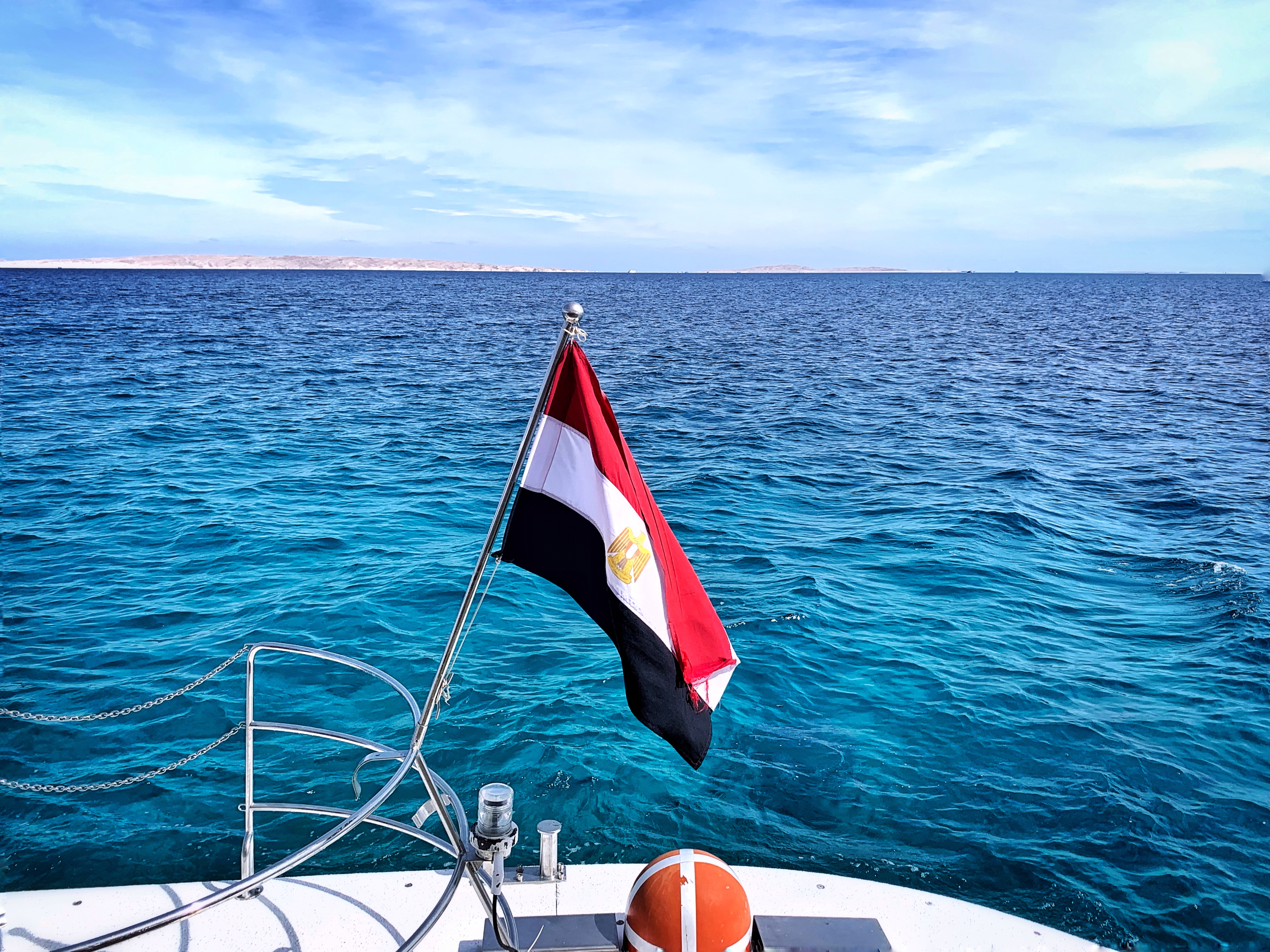
It might have been my imagination, but the sea seemed bluer than all other waters that I’ve encountered. From the shore, we took a motorboat out to the sea to reach a floating platform where our submarine was waiting. We made a circuit around the seabed of the Red Sea, and it was a pretty incredible experience looking out at the marine life from our submarine.


Another popular day trip was a desert safari in the Eastern desert, which was found between Nile and the Red Sea. Scaling the sand dunes was plenty of fun, and even more when we shimmied our way down. All the sand dunes look identical to me, but to the Bedouins who live in the desert, we knew that we were in capable hands and there was never a doubt they knew their way around. 


From Hurghada, we travelled to Luxor, the capital of ancient Egypt. We visited Karnak and Luxor temple, both of them landmark discoveries in the world of Egyptian civilisation, and capped off our Luxor leg with a horse-drawn carriage through the streets of Luxor in the evening sun.


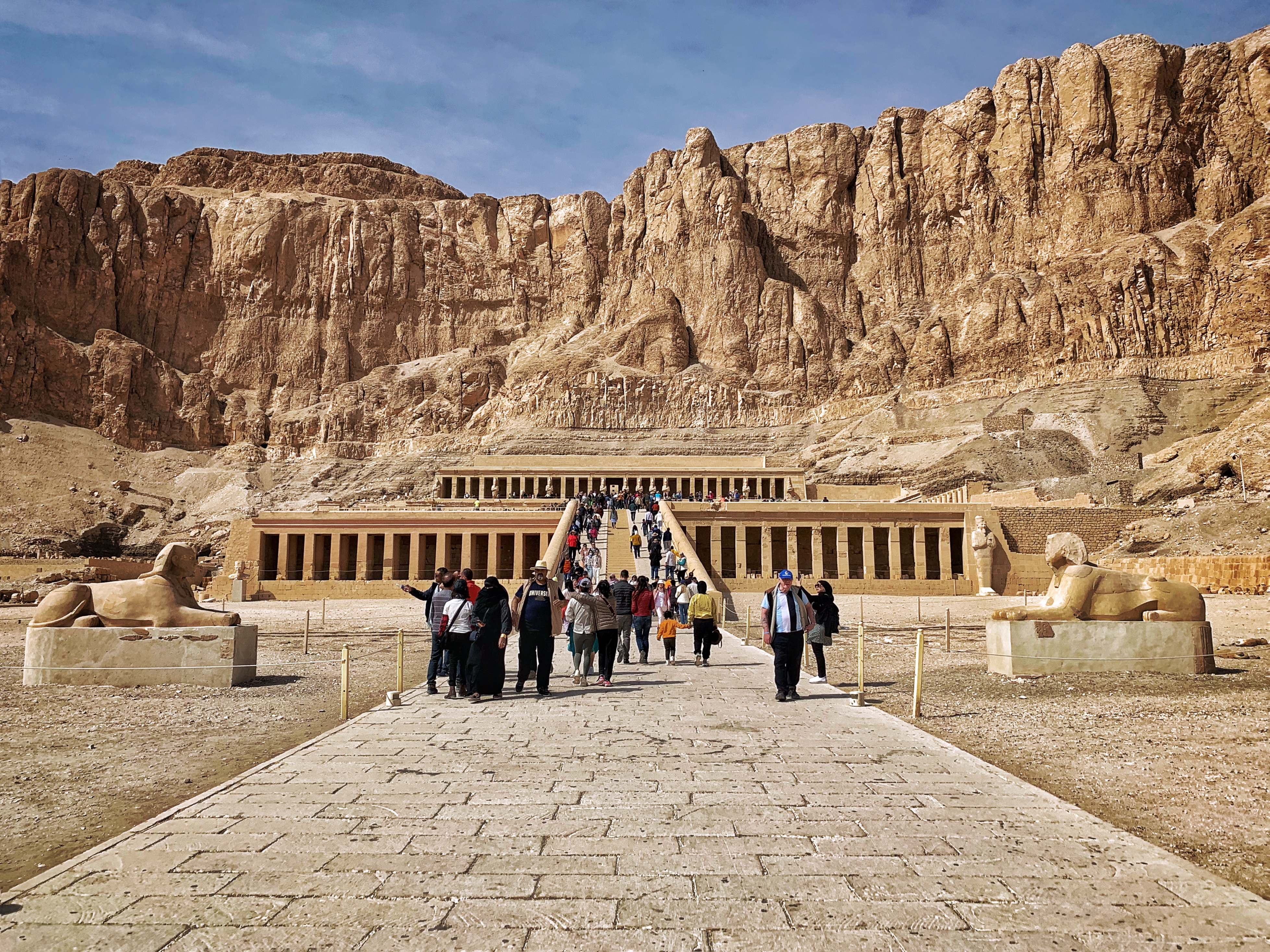
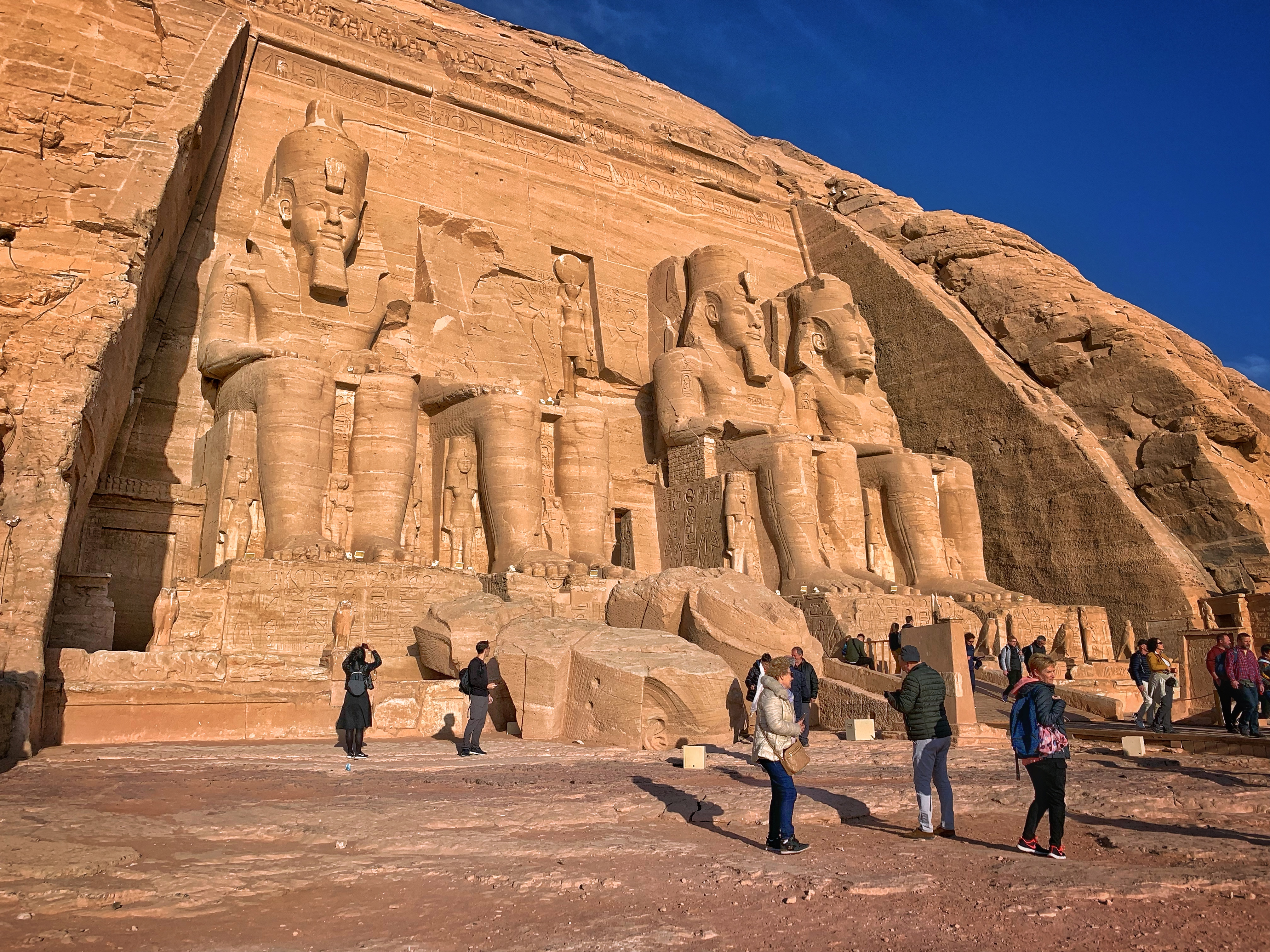
Boarding our cruise at Luxor, we spent a delightful few days sailing up the Nile river. We woke up every day in a different city, and disembarked to see the sights scattered along the Nile. We visited the Valley of the Kings, the Hatshepsut Temple, Kom Ombo Temple, Philae Temple, and of course, the Abu Simbel Temple.


Which modelling agency did these three people learn from in order to walk like that?  


On the cruise, entrepreneuring peddlers were never far behind, and in the daytime, they lashed their boat to the side of the cruise to sell their wares to the tourists up on the sun deck. With uncanny accuracy, they tossed their products up the 5-storey ship. If you’re happy with the product, you place your money in the bag and toss it back down. The transaction’s built on trust (and a terrific right arm), which clearly have been working well for the sellers.


Sweets are a big part of the Egyptian diet, and throughout the trip, we filled up on dates and baklava. 
Egypt is still much of an agrarian economy, producing much of the world’s strawberries, eggplants, rice, beets, sugar cane and dates. Which most of us could probably guess, as these products feature heavily in their diet. But we didn’t quite realise how abundant strawberries are, until we went into Carrefour, and did a double-take when we found trays of huge red strawberries going for about $1 per kilo. We bought trays of strawberries back to our hotel that night, and we ate to my heart’s content. 

Touring Egypt may be brutal for some. The experience can be loud, crowded and disconcerting, especially to foreigners who do not know the language. Arabic can sound harsh. Egyptians are also used to standing in closer proximity, speaking in louder voices and gesturing as they speak, all of which may come across as a little confrontational. There is a tipping culture, and even in museums where we had already bought tickets, we’ve had a restroom cleaner drop everything that he was doing, stand in front of you and bar your way into the restroom, demanding a tip before letting you pass. But I find that many of the locals genuinely want you to have a good time, and would to go out of their way for you. Back at the roadside stall with the roast pigeons, they didn’t serve zanjabeel, but when I told the runner that I was looking to try some, he quickly disappeared into the maze of the bazaar and came back afterwards with cups of zanjabeel. Most of the people here are friendly and warm, and are making the most of what they got. وداع Egypt, you brilliant, charming, wondrous and complicated country.